
1400 days
I wanted to start the new year with a deliberate shift in how I approach making music. My focus to date has always leaned heavily towards sound design — often quite insular, sometimes willfully so — and I felt the need to step away from the intensity of that head-down techno mindset. What I wanted instead was something more engaged: music that felt in conversation with someone else’s ideas, rather than circling my own.
That impulse is what led me to work with Ukrainian singer Daria Titovska, who performs under the name Odarka. Alongside the obvious qualities of her voice — emotive, precise, quietly powerful — she’s a remarkably intuitive songwriter. Her melodies and phrasing always seem to suggest more than they state outright. There’s an ambiguity running through her writing that hints at multiple emotional directions at once, and that openness is an extraordinary gift for a producer. It allows the material to be shaped, reframed, even gently subverted, without losing its emotional integrity.
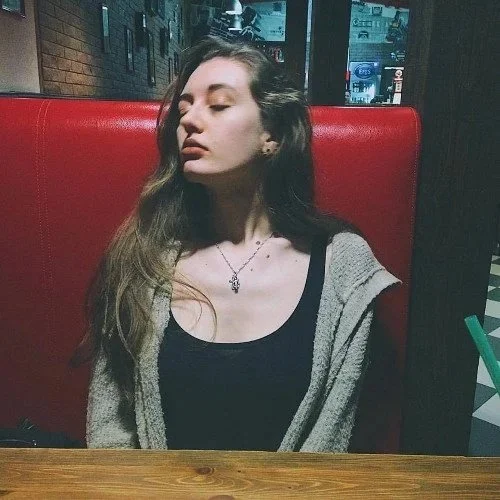
In this track, I’ve worked with just a single verse from one of her acapellas — something that could easily register as a love song — yet within this context it’s emerged as something darker. Not by forcing it, but by following the subtle tensions already present in her writing.
From the outset, I wanted the vocal to sit firmly at the centre of the track. That meant building a clean, uncluttered arrangement around it — which, as is often the case, took far longer than a dense one would have. The simplicity is earned rather than assumed.
There are three technical areas that really define the finished piece.
Low end & structure
A six-minute track built around a largely four-to-the-floor kick lives or dies on nuance. The kick needed authority without becoming static, so there’s a lot of quiet variation in tone and groove over time, all while preserving the sense of forward motion. Beneath that sit two basses: a relentless, gliding bass that anchors the track harmonically, and a second bass that provides grace notes and fills — distorted, more playful, and there for feel rather than weight. Making these three elements coexist cleanly, without masking or fatigue, took a significant amount of focused work.
Instrumental dialogue
There’s an instrumental section built around a synth lead that plays off both the vocal melody and the glide bass. This was a sound I wanted to live somewhere between a synth and a guitar — expressive, slightly physical, and capable of carrying emotion without crowding the mix. I built it entirely from scratch using Lounge Lizard, which remains a hugely underrated instrument in my view. I’m particularly happy with how it sits in the arrangement: present without dominating, melodic without overstating itself.
Texture & glue
Everything else in the track comes from relatively restrained sources: Operator-based pulses, scattered pads, and small textural elements designed to support mood rather than introduce new ideas. What ties it all together is subtle use of Spacebender, which has become a bit of a secret weapon for me. Rather than behaving like a conventional reverb or delay, it excels at creating unstable, evolving spatial movement — perfect for gently blurring edges and helping disparate elements feel like they inhabit the same emotional space.
1400 Days feels like a positive way to begin the year: a new sound, a new way of working, and a reminder that letting someone else’s voice lead can open up directions you wouldn’t have found on your own. I’m looking forward to building on it.